INTERVIEW - Adrian Barek, author of Crazy Farm
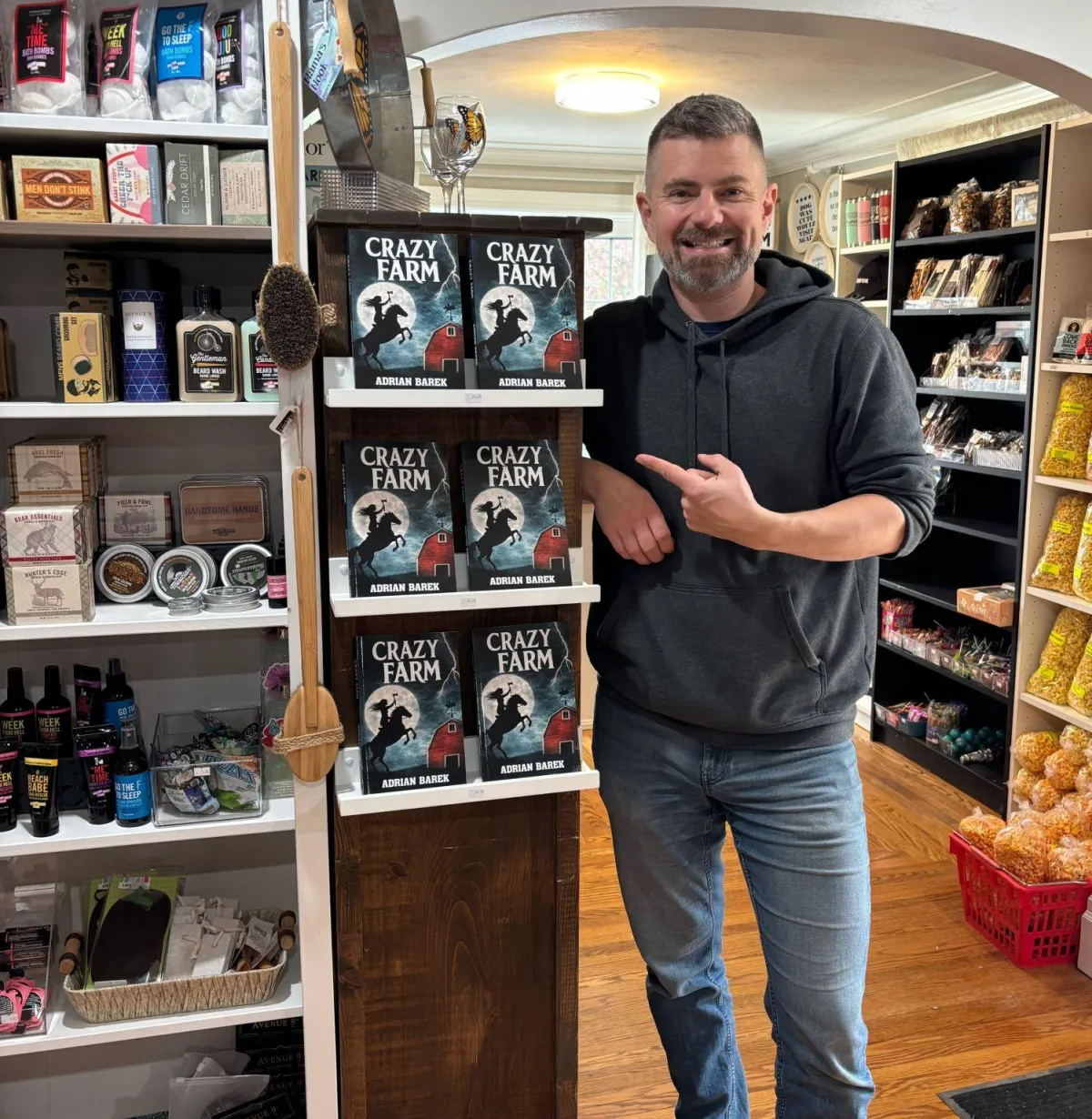
21 Futures sat down with the author of Crazy Farm.
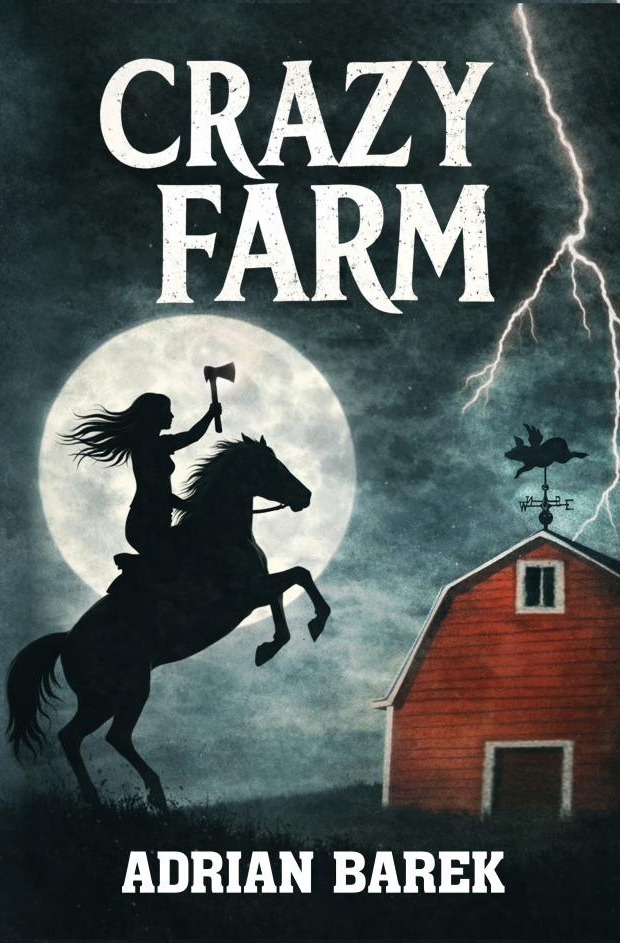
After a brutal winter, a silver-tongued stranger rode into town — and nothing was ever the same. The Meyer farm went from struggling to flush overnight. Money grew on trees. Everyone celebrated the new era of easy plenty except Claudette: a farmer's daughter who rides hard, swings a hatchet, and trusts callused hands over a city man's slick talk. With her family divided and the world around her going crazy, she goes looking for the truth. What she finds may cost her everything she loves.
Adrian Barek answers our questions about the writing of the book.
What was the seed of Crazy Farm? — did it start with the con man, the girl, or the town?
Ten years ago I made up a bedtime story for my daughter about a girl named Claudette and her horse, Rusty. Five years later, I tumbled down the Bitcoin rabbit hole, and began writing Claudette and Rusty's story into a full-length low-fantasy adventure with hard money as a world-building device.
The frontier setting feels deliberate. What does the American frontier offer as a backdrop for stories about skepticism, persuasion, and freedom that a contemporary setting can't?
I'm a sucker for old-timey aesthetic of Westerns. The frontier setting is real and recent history, close enough it feels familiar but different enough to feel like a fairy tale. Pioneer times were also much smaller of people, institutions, government, and all the techno frenzy of our modern era. Back then things were simpler, folks were mostly free and self-reliant, and it offered a great setting on which to tell a story about a family split by their belief in an easy money miracle.
Your heroine refuses to believe the stranger's pitch when everyone around her does. Is she a born skeptic, or did something shape that quality in her? Where did she come from as a character?
She isn't born a skeptic so much as forged into one by a childhood on a pioneer homestead. Her father, George Meyer, is a strong, stoic, stubborn farmer and it rubs off on her.
21 Futures publishes "freedom fiction." How does Crazy Farm fit into that tradition, and was that a conscious framing when you were writing it?
Freedom is absolutely a central theme of the story and I've tried to frame it a few ways. The Meyers must fight for their freedom against an encroaching fiat coalition led by Sir Washus Black, a dandy from the city who delivers an easy money miracle to the small frontier town. The miracle is equal parts money and dessert, and Washus pitches it to the poor, hardscrabble community as freedom from their hard lives of toil and drudgery. Most go along with the miracle because it's sweet and easy. The minority of skeptics are coerced and mandated by Washus with help from the local Sheriff, banker, doctor and clerk. At its heart, Crazy Farm is about the courageous few who are smart enough to see the truth with sufficient character to live according to it. Freedom fighter
Is the story ultimately optimistic about human nature — that one person's clear-sightedness can matter — or is it a warning about how easy it is to be taken in?
I'm optimistic about human nature. Good can defeat evil. One person's clear-sightedness can make all the difference.
Who are the freedom fiction writers or frontier storytellers you were consciously or unconsciously in conversation with while writing this?
Cormac McCarthy, CS Lewis, Ayn Rand, Brothers Grimm, Dr. Seuss, Dostoyevsky, Steinbeck, Hemingway
How long did this book take, from the original idea to the version on Amazon?
Five years of actively working on it, part time, as a passion project back-burner to life with 3 kids.
The frontier is often romanticized as a place of self-reliance and clear-eyed independence. Does your book complicate that myth?
Other than the low-fantasy magical elements, Crazy Farm frontier setting is accurate to 1880s north-eastern North America. Self-reliance and clear-eyed independence are part of the equation, but the down-sides of that are on full display as well. The story opens in late spring after a particularly hard winter that spoiled crops and led to many deaths by starvation and sickness.
What's next? Is there more frontier, more freedom fiction, more of this world?
Yes, there is more to come. I've thought about a graphic novel version and/or a kids book, or stick to novel format with a sequel. I have no shortage of ideas, but first I need some freedom-minded readers to tell me straight if I pulled off the message or not.
Learn more about the book and buy copies here, or via Amazon